
Something’s off with your drains. Maybe it’s a toilet that gurgles for no reason, or a smell drifting up from the yard that you’ve been ignoring for a few weeks now. At some point, someone (a neighbor, a plumber, a home inspector) mentions a sewer camera inspection. And the first thing most people want to know isn’t how it works. It’s what it’s going to cost them.
That number moves around more than you’d think. It depends on your pipe, your access point, who you hire, and honestly, where you live. Labor costs went up again this year, equipment has improved, and pricing shifted a little across most markets. Below is what people are actually paying right now, in 2026, along with what pushes that price higher or lower and whether it’s even worth doing.
What Is a Sewer Line Camera Inspection
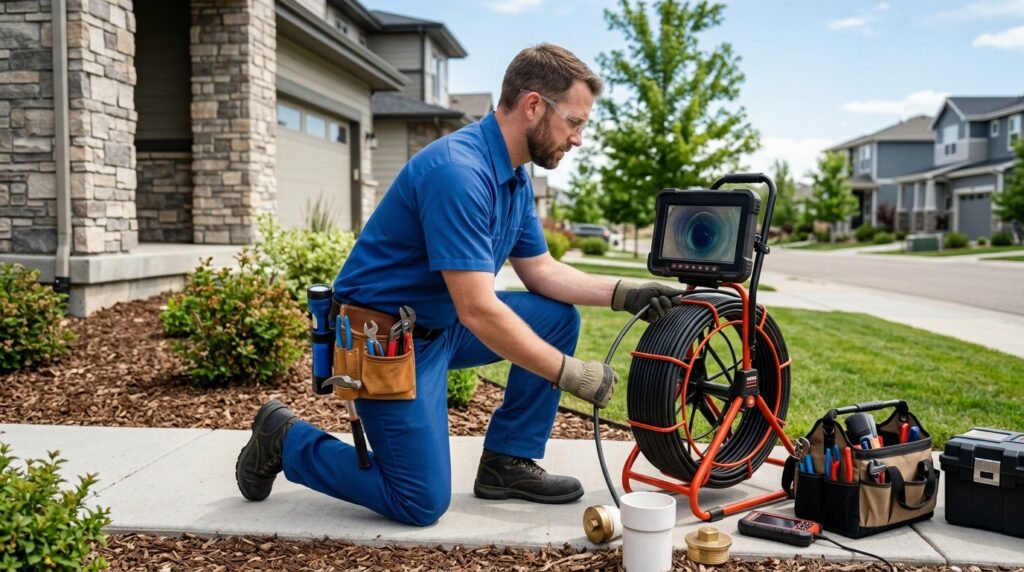
This is the simplified explanation of how a video pipe inspection works. A plumber will simply insert a small waterproof camera on a flexible rod straight through your sewer line. You will be able to see what the camera sees live on a screen. You do not need to make any guesses, and you don’t even have to dig up anything in order to figure out what is going on in your pipes.
Quick clarification, since people mix these up a lot. A sewer scope isn’t the same thing as a general drain camera inspection. A drain camera usually checks one single fixture line, like a kitchen sink or one bathroom. A sewer scope goes further. It runs the whole main line, from your house all the way out to the city connection or your septic tank.
Sewer Line Camera Inspection Cost in 2026 (National Averages)
Most homeowners nationwide pay somewhere between $225 and $800. The majority of jobs land in the $300 to $500 window. Here’s a closer breakdown depending on the type of job you actually need.
| Inspection Type | Average Cost (2026) | Notes |
| Basic sewer scope, one access point | $225 – $400 | The most common job type |
| Sewer scope with locator device | $350 – $600 | Marks the exact problem spot from the surface |
| Home inspection sewer scope | $300 – $500 | Usually added onto a real estate inspection |
| Long or hard to reach line (100+ feet, several bends) | $450 – $800 | More time, more wear on equipment |
| Inspection with written report and video | $350 – $600 | Common for insurance or legal use |
| National chains, roto rooter camera inspection cost included | $400 – $900+ | Big brands typically charge more than local independents |
City matters here too. The cost of camera inspection of sewer line in Denver tends to sit near the top of that range or a bit past it, and the same goes for places like Chicago, Los Angeles, or New York. Higher labor rates and stricter permitting rules are usually why.
What Pushes the Price Up or Down
Two homeowners can book what sounds like an identical job and walk away with completely different bills. Here’s the reason why.
- Length and shape of the line. A short straight run is fast work. A long line full of bends, or a secondary line feeding a garage or addition, takes longer and costs more.
- Access. Got a clean-out already in place? Good, that keeps cost down. No clean-out, and the plumber has to cut into pipe or remove a toilet just to get the camera in, that’s added labor right there.
- Which company you call. Local independent plumbers tend to charge less than the big national names. A roto rooter camera inspection cost, for example, often comes bundled with a separate service call fee that a lot of smaller shops skip.
- Documentation. A verbal summary is usually part of the base price. A formal written report with time-stamped video costs more, but you’ll likely need one for insurance, a real estate deal, or anything legal.
- Locator equipment. Marking the exact depth and spot of a problem on the surface usually adds another $75 to $150.
- When you need it. Same-day, weekend, or after-hours calls typically run 20 to 40 percent higher than a normal weekday appointment.
- Where you live. Coastal cities and higher cost of living areas run more expensive across the board, no matter which company does the work.
Sewer Scope vs Traditional Inspection
A fair question homeowners ask. Is a camera scope really better, or is this just a fancy upsell on something plumbers already did the old fashioned way?
| Factor | Sewer Camera Scope | Traditional Inspection |
| Method | Fiber optic camera fed straight into the pipe | Visual check of exposed pipe, listening for clues |
| Accuracy | Shows exactly what’s happening inside the line | Educated guessing based on surface signs |
| Cost | $225 – $800 | Often free or cheap, but limited use |
| Best for | Home purchases, recurring clogs, aging pipe | A general once-over, nothing deeper |
| Documentation | Video and written report available | Usually just verbal notes |
The short version. A traditional inspection might tell you something’s wrong. A sewer scope tells you exactly what’s wrong and exactly where. That’s the whole reason real estate deals and most plumbing diagnoses now lean on cameras instead of the old method.
Home Inspection With Sewer Scope
If you’re buying a house, especially one built before the 1980s, adding a sewer scope onto your standard home inspection is one of the smartest moves you can make. Most general home inspectors don’t check underground pipe at all. It’s outside what they’re equipped or trained to do.
During a home purchase, a sewer camera inspection can turn up things like:
- Root intrusion from big trees near the property line
- Outdated pipe material prone to failure, like Orangeburg, clay, or cast iron
- Bellied sections where waste just sits instead of draining
- Joints that have shifted or come apart with age
- Old patch jobs the seller never bothered mentioning
Finding any of that before closing gives buyers something real to negotiate with. Sellers get a chance to fix it quietly instead of watching a deal fall apart at the last minute.
Is a Sewer Camera Inspection Worth It
For most homeowners, yes. Here’s the math behind that.
- A full sewer line replacement can run $4,000 to $25,000 depending on length and how hard it is to reach. A $300 scope that catches the problem early can save you from ever getting to that number.
- Recurring clogs are usually a symptom, not the actual cause. A camera inspection finds the real problem instead of you paying to snake the same line every few months.
- Insurance companies and city utility departments often want documented proof of pipe condition before they’ll approve a claim or issue a permit.
- It removes the guesswork entirely. Digging around blind, hoping you hit the right spot, usually ends up costing more in labor than the inspection would have.
The one real exception is a newer home with no history of problems and no symptoms showing up. In that case, the cost might not be worth it unless you’re the one buying the property.
How Long Does a Sewer Scope Take
Most jobs take 30 to 60 minutes, start to finish. A longer or more complicated line, or a home with multiple access points, can stretch that to 90 minutes. Add a locator device and tack on another 15 to 20 minutes.
How Often Should You Get One
There’s no single answer, since it depends on your home, but here’s the general guidance plumbers give.
- Homes over 20 years old: every 2 to 3 years, as routine maintenance
- Homes with large trees near the sewer line: once a year, since root intrusion only gets worse over time
- Anyone buying a home: always, regardless of the home’s age, before closing
- After a major clog or backup: right away, to rule out real structural damage
- Homes on septic systems: every 1 to 2 years, alongside regular septic maintenance
What’s Included in a Professional Inspection
A proper sewer scope from a licensed plumber typically looks like this.
- A quick consultation covering symptoms, access points, and pipe history if it’s known.
- Camera insertion, usually through an existing clean-out, or a temporary access point if there isn’t one.
- Live footage review while the technician feeds the camera through, watching for cracks, blockages, and roots.
- Locating the issue on the surface with a transmitter, if that’s been requested.
- A summary, either walked through on the spot or written up, covering what was found and what to do about it.
Sewer Camera Inspection Cost in Roseville and Nearby Areas
Closer to home, pricing in Roseville and the surrounding Placer and Sacramento County area tracks pretty close to the national numbers, usually $250 to $600 depending on line length and how easy the access point is. Older neighborhoods around Roseville with mature trees tend to turn up more root related issues, which is exactly why it’s worth scoping the line before a small problem becomes a full yard excavation.
Whether you’re buying a home, dealing with the same clog coming back again and again, or just want to know what’s happening underground before a landscaping project, a local licensed plumber can walk your line and show you the footage as it happens.
Ready to get your sewer line checked? NLP Plumbing offers camera inspections throughout the Roseville area with upfront pricing and no surprises. Call today to schedule your inspection and see exactly what’s going on underground.
Frequently Asked Questions
How much does a sewer scope cost?
Most inspections run $225 to $800, with the national average landing around $300 to $500 for a standard home with an accessible clean-out.
How much is a sewer scope for a home inspection?
Usually $300 to $500 when it’s added onto a real estate purchase inspection.
Is a sewer camera inspection worth it?
For most homeowners, yes. It catches problems early, often well before they turn into a much bigger repair, and it’s practically expected before buying an older home.
How long does a sewer scope take?
Typically 30 to 60 minutes. Longer or more complicated lines can stretch to 90 minutes.
How often should you get a sewer scope?
Every 2 to 3 years for homes over 20 years old, and yearly if there are large trees near the line.
What’s the difference between a sewer scope and a drain camera inspection?
A sewer scope covers the full main line to the city connection or septic tank. A drain camera inspection usually just checks one single fixture line.